
A couple days ago, someone asked me (having walked into my office and seen my desk with several small piles of books), “do you remember everything you read?”
“No. I know of people who do, but I don’t.”
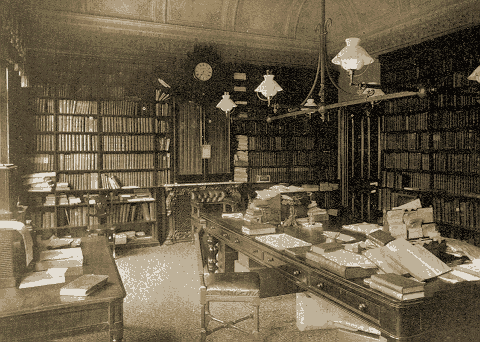
So you might ask the question, “then why read, if you don’t remember everything?”
Well, there are two ways of thinking about the reading of books and the remembrance thereof.
One is that we must master the books — that we read and meditate and soak in the books so that the principles are learned, digested, and appropriated, virtually to the point that they become a part of our lives. This is an admirable and wise way to read books. Don’t read quickly and simply to say something has been read, but read to learn, grow, and mature. Obviously this is the way in which we do and must read Scripture.
Or a second thought is that we read to feed ourselves on good and godly thoughts for that day, trusting that the cumulative effect will transform us. In this second manner of reading, we are not concerned so much to remember every detail, nuance and argument of the book, but we read to be encouraged and helped for that day. In reality this is the way most of us read most books. Some books will become an essential part of our lives and library — to be read and reflected on repeatedly and joyfully. But most books are like most meals — they feed, nourish, and satisfy us for that day, but remember what we’ve eaten 43 days later? Probably not. That does not invalidate the meal that was eaten that day. It must means it was not superbly memorable.
And that is also an acceptable way to read books as well.
So read books to be mastered by them or read books to feed your soul — just be sure to read books (good books!).
 Words of Grace