
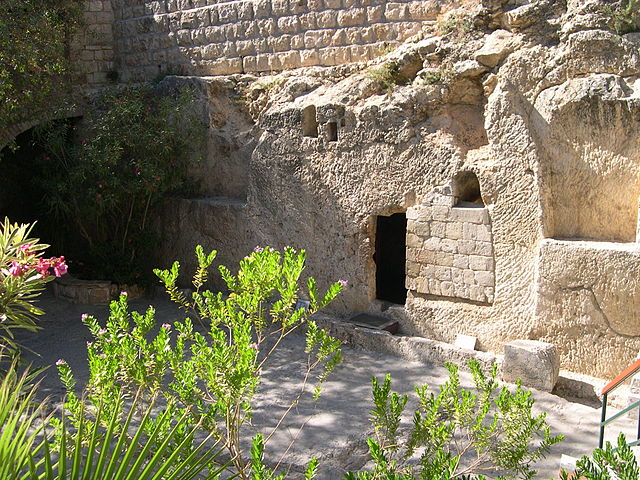
Passover is finished. The crowds are gone from Jerusalem. The Roman soldiers are relaxing. The disciples and their friends and family are returning to their daily duties and a few added priorities. There is still some buzz in the city and among the disciples, but Easter is over.
Or is it?
What happens after the resurrection? Yes, the believer can be confident in the promised salvation from Christ, but does anything else change?
Indeed, much changes, as the New Testament affirms.
Because of the resurrection, care of God’s people is entrusted to Christ’s disciples.
So when they had finished breakfast, Jesus said to Simon Peter, “Simon, son of John, do you love Me more than these?” He said to Him, “Yes, Lord; You know that I love You.” He said to him, “Tend My lambs.” He said to him again a second time, “Simon, son of John, do you love Me?” He said to Him, “Yes, Lord; You know that I love You.” He said to him, “Shepherd My sheep.” He said to him the third time, “Simon, son of John, do you love Me?” Peter was grieved because He said to him the third time, “Do you love Me?” And he said to Him, “Lord, You know all things; You know that I love You.” Jesus said to him, “Tend My sheep.” (John 21:15-17)
Not only is Peter restored to Christ and ministry in this interaction, but he is given instruction about how to care for Christ’s people, and the instruction to him serves as a pattern for us as well — we care for one another by the administration of Scripture to life. Tending and shepherding is to spiritually feed, protect, heal, and restore the people of God so they delight in God above all else.
Because of the resurrection we go to the nations with the gospel and make disciples of Christ.
“And Jesus came up and spoke to them, saying, ‘All authority has been given to Me in heaven and on earth. Go therefore and make disciples of all the nations, baptizing them in the name of the Father and the Son and the Holy Spirit, teaching them to observe all that I commanded you; and lo, I am with you always, even to the end of the age.’” (Matt. 28:18-20; see also Lk. 24:47-48; Acts 1:8)
The message of the death and resurrection of Christ is of first importance (1 Cor. 15:3). There is no message that is more essential. So we take that message of Christ’s work on the cross to other countries and other cultures and exhort them to believe and then train them to follow and obey Him. That was a requirement not only for the Twelve, but for all people who believe in Christ.
Because of the resurrection, we work diligently, tirelessly, and persistently in Christ’s church and with Christ’s people.
“Therefore, my beloved brethren, be steadfast, immovable, always abounding in the work of the Lord, knowing that your toil is not in vain in the Lord.” (1 Cor. 15:58)
Yes, work for Christ is often laborious, perplexing, and exhausting. But we work in caring for the people of God because Christ is resurrected (we are “steadfast” in the resurrection — the resurrection is the foundation of our ministry). We endure hardship and we sacrifice joyfully because Christ is resurrected — and because we also share in that resurrection (1 Cor. 15:20 — more, many more, are going to be resurrected after Him).
The early church that was bombarded with problems both from inside and outside could be tempted to quit. They needed the reminder to continue to work. And so do we:
“What a word Paul gives to the countless Christians who work and pray and give and suffer as little as they can! How can we be satisfied with the trivial, insignificant, short-lived things of the world? How can we ‘take it easy’ when so many around us are dead spiritually and so many fellow believers are in need of edification, encouragement, and help of every sort? When can a Christian say, ‘I’ve served my time, I’ve done my part; let others do the work now’?” [John MacArthur]
Easter is over. Our privileged work has just begun.
 Words of Grace