
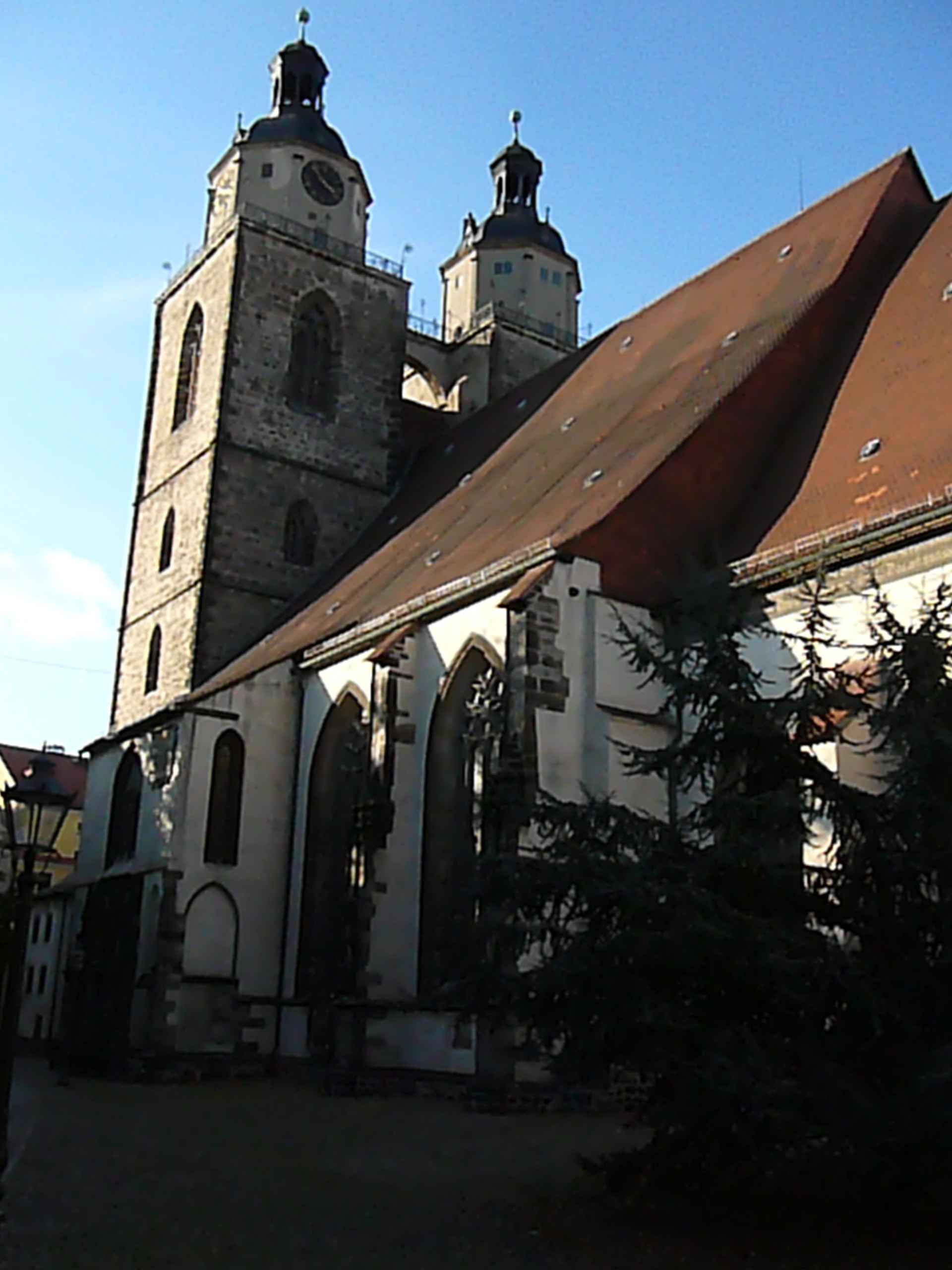
When our trip to Germany was planned, we intentionally inserted an extra day at the beginning of the trip prior to beginning the teaching to give us a little more time to acclimate to the time change. When thinking about what to do on that day, Dad asked on one occasion, “Would you like to go to Wittenberg?”
No need to ask that question twice! So on Monday morning, we made the 1-1/2 hour trip through quaint villages and towns to the city where Martin Luther not only posted the 95 theses on the castle church door, but also where he spent the majority of his ministry life as a professor at the university there. It was a part of the trip that I was quite excited about, and I was not disappointed.
Some thoughts about our day in Wittenberg —
Luther’s life was spent in academia — he was a professor. But his life was inexorably intertwined with the church. While not a pastor, he frequently preached at the town church in Wittenberg — one year preaching some 200 times. So while Luther was paid and sustained financially by the university, his love was still of the church and the Reformation took place in large part because of his involvement in the church. It can sometimes be a temptation to suppose that nothing significant happens on a given Sunday — yet the Reformation is a demonstration of the power of worship and instruction done through the faithful weekly proclamation of the Word of God to transform individuals into the likeness of Christ and to likewise transform and mature the institution of the church.

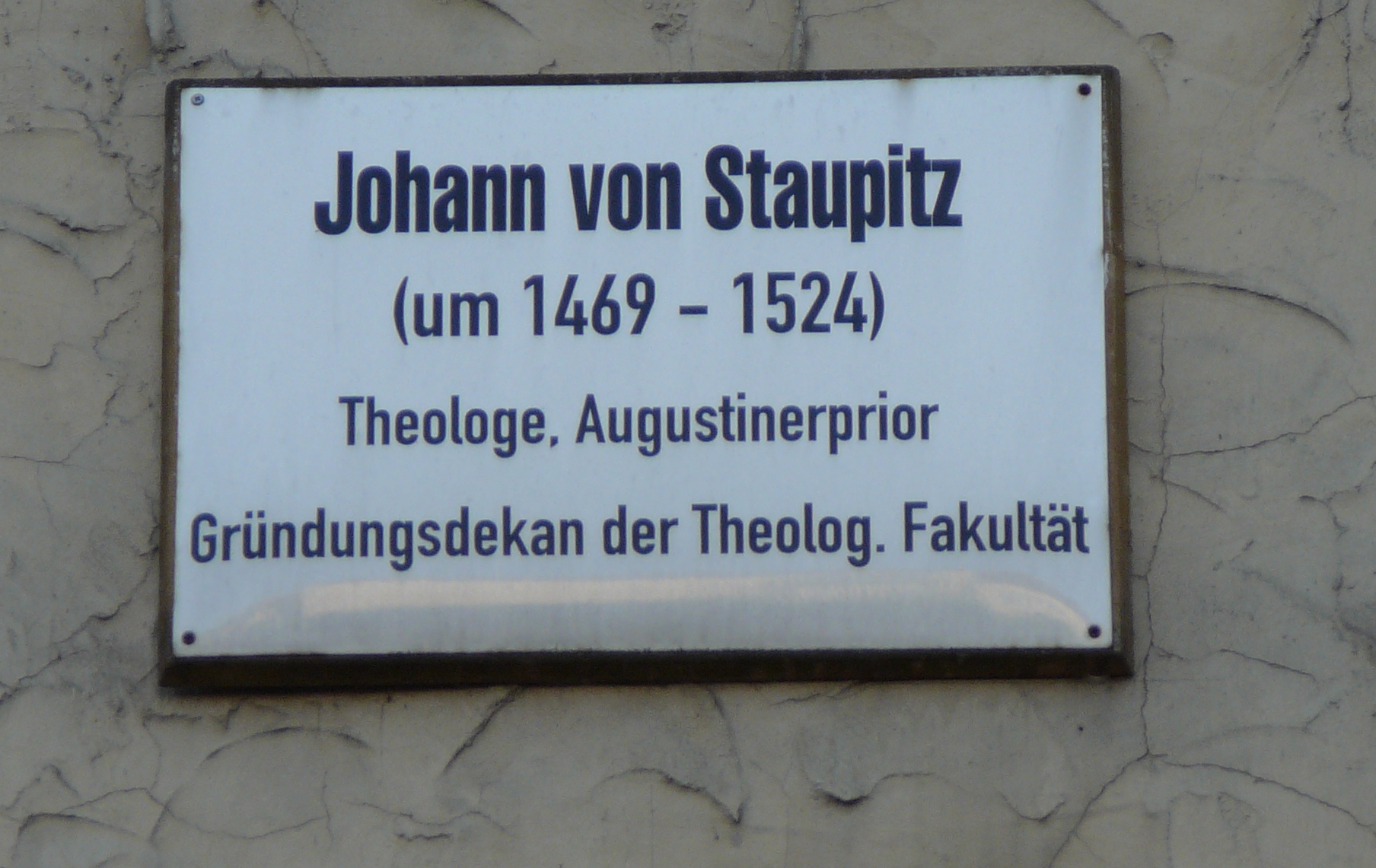
It is easy to think that the Reformation was begun by Luther and carried on by Calvin and that their efforts were singular in bringing about change in the church. Yet, while their efforts were monumental and significant, they were hardly alone. The town of Wittenberg has plaques posted on many buildings indicating the locations of where other godly men who influenced the Reformation stayed and worked while they were in Wittenberg. These sign posts are indications that as in the time of Elijah, God had and has a host of men who have not bowed in worship to idols and false deities. Luther and Calvin were hardly alone in their work; nor are we alone in our work and ministry.

Despite not standing alone, the lives of the Reformers were hardly easy. Not only were the times difficult, but the sacrifices they made on behalf of the cause of Christ were significant. Luther’s schedule was daunting as he poured himself into writing, preaching, teaching, and training men in his own home through his table talks. His life was focused and he was attentive to the things that mattered most and graciously and willingly made sacrifices to advance the cause of Christ. I could not help but ask myself in reflection, “How willing am I to joyful sacrifice and pour myself out for the cause of Christ, His Word, and His church?”
The two main churches in Wittenberg were both Catholic when built and then became Lutheran as a result of the Reformation. They remain Lutheran, but no longer preach the same gospel that Luther and the Reformers preached and defended. Standing in that now liberal church, I could not help but remember that the same is true today of Jonathan Edward’s church in Northampton. So two complementary thoughts rested on me: 1) we gratefully stand on the shoulders of other faithful men — our lives and ministries are shaped by their past obedience; 2) how quick we are to forget the sacrifice of those men and the primacy of Christ and the Word and gospel for which they fought. There is a sober warning there. Faithfulness in one generation does not guarantee faithfulness in future generations. May Christ keep me ever mindful of my and our singular task of clinging to Him and His truth.
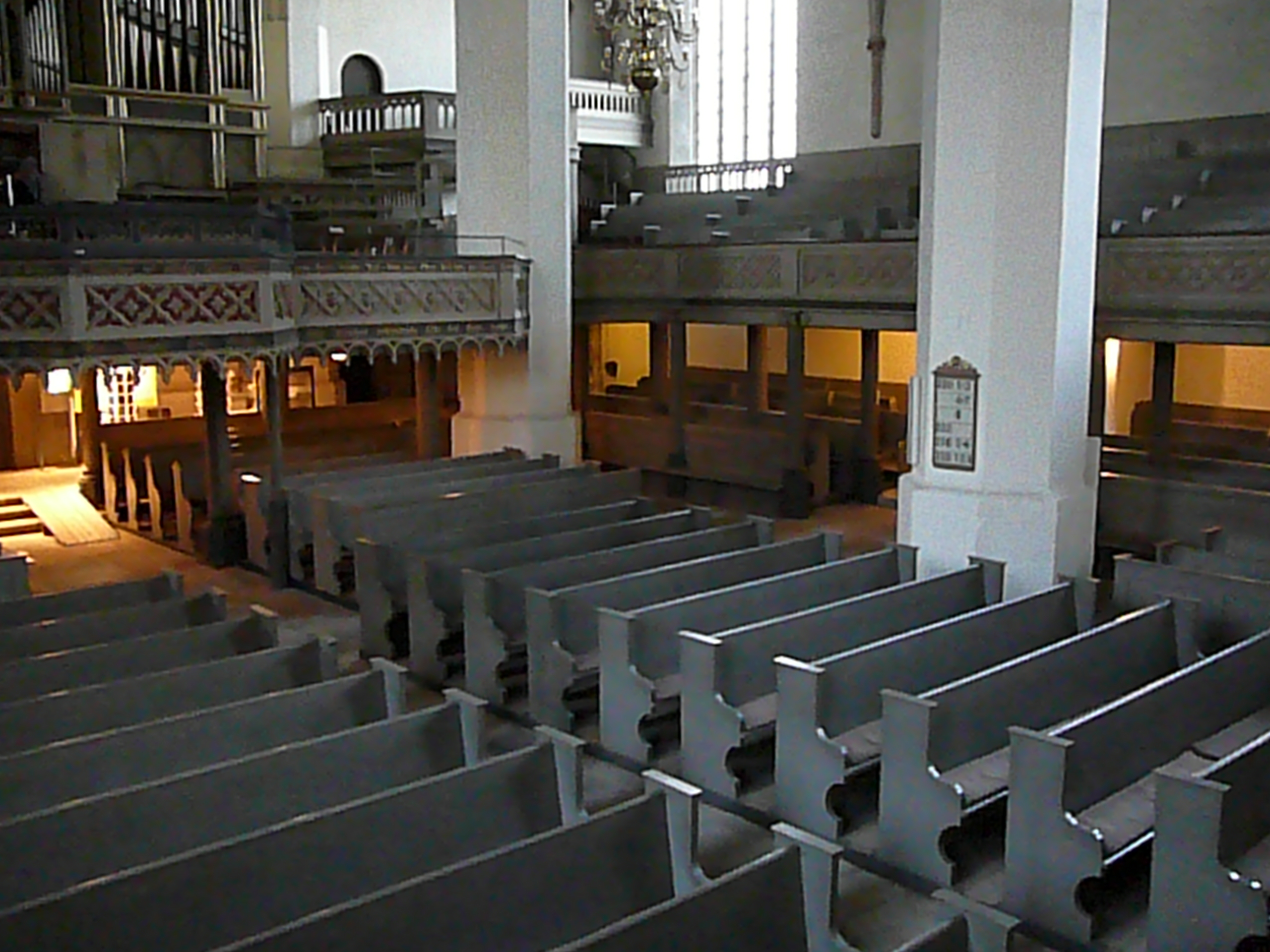
Standing in the pulpit where Luther so frequently preached was a great privilege and treat. Yet as I stood there I realized that for all the differences in our churches — the size, influence, pews, musical instruments (that was one overwhelmingly large pipe organ!), and location — our task is the same. We use the same Bible to preach the same Christ to point to the same gospel to produce the same transformation. An ocean apart in distance and centuries apart in time, yet we stand in the same place with the same message and the same privileged responsibility.
This preaching, and his writing reflect his commitment to the Word of God. While in Germany, I reread the chapter on Luther in John Piper’s biography, The Legacy of Sovereign Joy. In that chapter, he notes the following statement from Luther:
It is a sin and shame not to know our own book or to understand the speech and words of our God; it is a still greater sin and loss that we do not study languages, especially in these days when God is offering and giving us men and books and every facility and inducement to this study, and desires his Bible to be an open book.
O how happy the dear fathers would have been if they had our opportunity to study the languages and come thus prepared to the Holy Scriptures! What great toil and effort it cost them to gather up a few crumbs, while we with half the labor — yes, almost without any labor at all — can acquire the whole loaf! O how their effort puts our indolence to shame!
All of Luther’s life and ministry reflect that desire to study and know the Word of God.
In summation, the trip to Wittenberg provoked in me two primary responses — one of humility, that God has placed me into the same service of ministry as the men of the Reformation, and one of gratitude that God has raised men like Luther to serve His church, not only for that generation but also for generations to come. While we viewed the many recollections of Luther in Wittenberg, ultimately, as all things are, the trip was about God and His grace to His people.
 Words of Grace
Hi Terry,
Great summary of the Wittenberg venture–it helped relive it! I’m sure your words will help whet an appetite with others for this valuable trip.
thanks again,
Love, Dad
Dad — It was a great day! I’ve enjoyed going back through my pictures, and as many as I took, I wish I’d taken more!