
I almost missed it.
This morning, my Bible reading began in 2 Chronicles. And there, tucked into the account of the construction of the Temple in Israel was a little gem of grace that I just about skipped past. And then my rememberer worked.
Then Solomon began to build the house of the Lord in Jerusalem on Mount Moriah, where the Lord had appeared to his father David, at the place that David had prepared on the threshing floor of Ornan the Jebusite (2 Chron. 3:1).
The writer was just writing a map — in the BG era (Before Google), they needed some means of expressing place and location and this was it. All he was doing was reminding the readers of the placement of the Temple. Or was he?
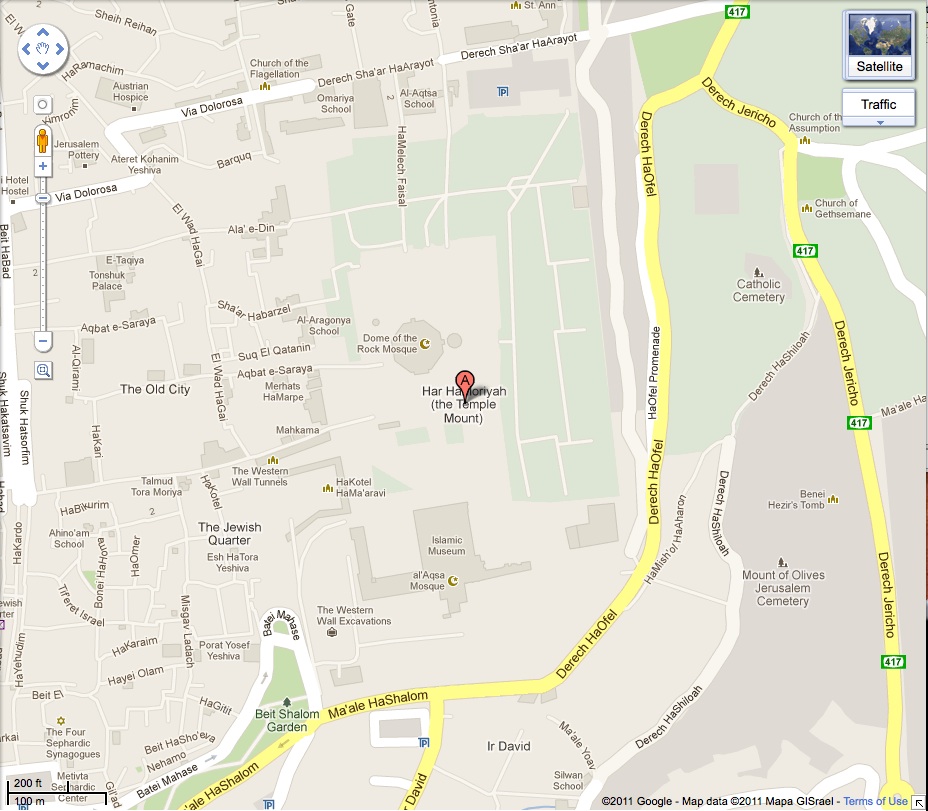 When we think of the mount where the Temple was built, we often think of Mount Moriah — the place where Abraham took Isaac to sacrifice in obedience to God (Gen. 22). The account between that father and son is a compelling picture of obedience, trust, and a foretaste of the provision of Christ as the ultimate sacrifice.
But that’s not the picture the writer of Chronicles is drawn towards. The Temple was erected not only on the place of God’s provision of a sacrifice for Abraham and Isaac, but it was also built on the place where God’s wrath for David’s sinful census ceased (1 Chron. 21:18).
David had sinfully chosen to express his confidence in himself instead of God by numbering the people, and God expressed His wrath with “three days of the sword of the Lord.” Seventy thousand men died. And the discipline ended at the threshing floor of Ornan (2 Sam. 24:16). And it was at that location that David then not only built an altar in obedience to the Lord’s command, but it was also the place where the Temple for all Israel was ultimately built.
So each time a worshiper would later come to the Temple, he was not only reminded of Abraham’s obedience in that place, but he also was reminded of the deceitfulness of sin, the discipline of God for sin, and the mercy of God that withholds discipline and judgment. The foundation of that temple was thus laid on a bed of grace and formed in anticipation of the gospel.
Yes, the writer was providing a reminder of place and time, but with these words, he is also drawing a map to direct the readers to an understanding and remembrance of grace.
We do well to follow that same map. The temptations to sin will pull at and at times even take down godly men and God will discipline His children to bring them back to conformity to Himself (Heb. 12:4-11). But with that discipline, He is also a gracious God who has provided a means of righteousness for us that is outside of us and infinitely superior to us and our righteousness. We live every day on the foundation of the gospel of grace. Christ and the gospel are our life — the foundation on which all that we do stands.
Thanks be to God for His mercy to withhold discipline and wrath and His grace to impute Christ’s righteousness to us!
 Words of Grace
One thought on “Founded on the gospel”