
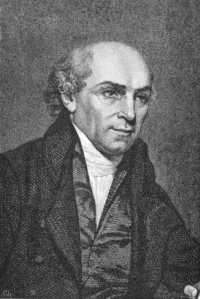
 This is the second of a three-part series on the life of William Carey and his commitment to missions and his influence on the modern missions movement.
Biblical principles that guided Carey’s life
To gain encouragement and wisdom from the life of this man, the question “What were the truths that sustained Carey in pursuing a new course of ministry?” must be asked. A review of his journals, letters, and some of the more than 50 biographies[i] that have been written about him reveal a number of Biblical principles that provided his passion and stability.
Carey’s journals and letters are permeated with trust in the working of God in his life. Whether that difficulty brings “ease” or “difficulty,” Carey regularly saw both as the gracious workings of God and thus saw both as God’s blessing in his life.
It is seen in one of his earliest writings, a journal entry on the day of his departure from England to India on June 13, 1793: “After being prevented from going on the ‘Oxford’ (by reason of the abominable East India Monopoly) we embarked by divine providence in the Cron Princess Marie, a Danish ship.”[ii] Providence it was indeed, as they were attempting to enter India without the permission of the British government, making them “illegal aliens.” But traveling on a Danish ship allowed them to enter India without harassment from the East India Trading Company.
His letters and journal regularly sound notes similar to that of May 1, 1794. Written at a time when he was not yet settled in a permanent spot in India, John Thomas had proved unfaithful with their finances leaving Carey and his family living in virtual poverty while Thomas had 8-12 servants. Yet Carey wrote, “I find that support in God which I can find no where else, and perhaps these trials are designed to put me upon trusting in and seeking Happiness[iii] from the Lord alone.”[iv]
So, when Carey was sent by the Particular Baptist Society for the Propagation of the Gospel Among the Heathen (hereafter referred to simply as “the Society”) to India instead of to Tahiti as had been his original dream (having been influenced by the writings of Captain Cook), Carey was wholly content (and holy content). And when it was that three of his children died (Ann and Lucy both at two years of age in England and Peter at five years of age in India), Carey could still be content with God’s sovereign working.[v] When the death of Peter put his wife Dorothy “over the edge” emotionally — into an “insanity” from which she would never recover, still Carey was at peace with God’s work.[vi] On the death of his beloved second wife, Charlotte, he honored the name of God.[vii] When nearly 20 years of work were destroyed in one night by a fire at their printing presses, Carey did not despair as one who had no hope.[viii]
Even believers in Christ may become overly distraught over having to endure something “bad” and miss something “good.” Carey rightly observed in a letter to his sisters that neither he nor we are good judges of “good” and “bad:”
Be assured that I have borne a share of all your trials and afflictions, and have blessed the Lord for supporting you so graciously. I have no doubt but the present dispensations of Divine Providence are those which are the most united to your good of all others, had it not been so you would not have been exercised with them; for no good thing will be withheld from them who walk uprightly. We are the worst possible judges of what things are really good things, for we generally suppose ease, prosperity, friends, and external enjoyments health and plenty to be good things, whereas they may be either good or evil according to circumstances,…
God’s judgement of what things are good, therefore, frequently differs from ours, for he often bestows those external, apparently good things on his Enemies, and visits his saints with poverty, disappointment, afflictions, contempt, and many other things supposed by us to be evil. He, however, well knows these external evils to be necessary to the substantial good of his servants, and were not this the case they would not be exercised under them; for be doth not willingly afflict nor grieve the Children of Men. I rejoice that you have both been enabled to commit your ways to the Lord; persevere in that cause and all will be well. The joy of the Lord will be your strength.[ix]
Over and over, Carey gives evidence to the truth of God: “Why should the nations say, ‘Where, now, is their God?’ But our God is in the heavens; He does as He pleases” (Ps. 115:2-3). And there is contentment that results from one who sees God is graciously over every event and action of life: “And we know that God causes all things to work together for good to those who love God, to those who are called according to His purpose” (Rom. 8:28).
A second Biblical principle that shaped Carey’s life was his love for and dependence on Scripture. This sentiment was well-expressed in a letter to Jabez, who had departed the mission at Serampore to engage in translation work elsewhere: “The success of your labours does not depend upon outward ceremony nor does your right to preach the Gospel or administer the ordinances of the Gospel depend on any such thing but only on the divine call expressed in the word of God.”[x]
His commitment to the Scriptures was revealed not only in the astounding number of translations that he himself did or oversaw, but also as early as his Enquiry. The entire second article of this document is comprised of a brief exposition of the book of Acts: why should believers go to the “heathen” with the truth of the gospel? Because this is the Biblical command and pattern of Scripture itself. “Why was Carey so committed to a Bible-centered approach to missions? Because he knew that the Word of God was full of living power. Time and again he witnessed the transforming effect of the simple reading of the Scriptures on the people of India, steeped as they were in the fables and false theologies of their culture.”[xi] His ministry was ordered around the prayer of Jesus, “Sanctify them in the truth; Your word is truth” (Jn. 17:17).
It was this commitment to the Scriptures that led to Carey’s consuming passion to see those who were dead in their sin to come to know Christ as Savior and redeemer. The translations were the tool; the goal was conversions.[xii] His journal and letters reverberate with deep heartache over those who were dying without the knowledge of Christ.
…if there is anything engages my heart in prayer to God it is that the Heathen may be converted…[xiii]
O may my Heart be prepared for our Work — and the Kingdom of Christ set up among the poor Hindus.[xiv]
I wish that we might see some good fruit of our Labours — and doubt not but we shall soon have some reason to rejoice in the Salvation of God.[xv]
…in the Evening had a long conversation with two or three Hindus about the things of God. I first shewed them a translation of the ten Commandments, with which they were much delighted: I tried then to make them understand how contrary the second Commandment was to their practice — and as I could tried to tell them of the sinful, helpless state of man — and the willingness of God to save — but my imperfect knowledge of the Language makes me liable to mistake their meaning when they speak — and to be misunderstood by them.[xvi]
…the uncivilized state of the heathen, instead of affording an objection against preaching the gospel to them, ought to furnish an argument for it.[xvii]
His heart was consumed with Christ’s great commission.[xviii] So deeply did he believe in this responsibility being for today that he said that if the command was only for the apostles, then so too was the promise of Christ’s “divine presence in this world…limited” to the apostles.[xix]
A fourth guiding Biblical principle in his life was his trust in the practice of prayer. This is seen again in An Enquiry.
The most glorious works of grace that have ever taken place have been in answer to prayer…
If an holy solicitude had prevailed in all the assemblies of Christians on behalf of their Redeemer’s kingdom, we might probably have seen before now not only an “open door” (2 Cor. 2:12) for the gospel, but “many running to and fro, and knowledge increased” (Dan. 12:4); or a diligent use of those means which Providence has put in our power accompanied with a greater than ordinary blessing from heaven.
Many can do nothing but pray, and prayer is perhaps the only thing in which Christians of all denominations can cordially and unreservedly unite…[xx]
Yet by this he did not mean to pray and not work (which would be akin to the theology of John Ryland, Sr.). He explicitly notes: “We must not be contented however with praying without exerting ourselves in the use of means for the obtaining of those things we pray for.”[xxi] His trust was in the God who answered prayer, but that was balanced by an understanding that God works through those who trust in Him.
His life of prayer afforded Carey sweet fellowship with the Savior.[xxii] Yet he also yearned for fellowship with believers. This yearning propelled him to regularly articulate another Biblical foundation of his life — the necessity of fellowship and unity among believers.
Carey’s journal, documenting his first two years in India, particularly laments his loneliness. It is not until his next to last entry, 23 months after he began his chronicle, that he writes, “Blessed by God have at last received Letters and other Articles from our Friends in England. I rejoice to hear of the Welfare of Zion…”[xxiii]
This led him to pursue godly fellowship in two arenas, the first being fellowship with other believers. When Joshua Marshman and William Ward and their families came to live with Carey and his family at Serampore (they became affectionately known as the “Serampore Trio”), he devised a covenant that was instituted for the protection of their unity. As part of that agreement, every Saturday evening all the members of the “brotherhood” in Serampore would gather for an opportunity to air any differences that had arisen in the previous week. If the offense was not voiced during that time, there would be little comfort or help for the person who brought it up at a later time.[xxiv] The intent was for sin to be addressed quickly, and with true offers of confession and forgiveness. “Honesty, Intimacy, Equality were the watchwords for the community.”[xxv] Help and fellowship were long in coming to Carey in India, and he did all he could to preserve their unity and fellowship.[xxvi] His quest for unity reflects the tenor of the New Testament’s emphasis on the “one anothers.”[xxvii]
Yet fellowship, especially in the early years in India was not always possible. So he sought fellowship in another arena — the arena of the written word. He became dependent on the writings of others, standing on the shoulders of other spiritual giants to encourage his own heart. Carey, who became such a rich encouragement for others to pursue missions and ministry, fed himself at the trough of David Brainerd’s Diary, the life and ministry of John Eliot, the sermons and writings of Jonathan Edwards, and numerous others, including: John Newton, William Cowper, John Bunyan, John Flavel and Martin Luther. Like those who followed the Apostle Paul, he followed the lives of men who followed Christ.[xxviii]
A sixth guiding principle for the life of William Carey was his practice of personal humility. In fact, this may have been the great key to his success.
Over and over his journals particularly are filled with honest self-examination and critique of his heart:
Still I mourn my Barrenness, and the foolish wanderings of my mind, surely I shall never be of any use among the Heathen. I feel so very little of godliness in my own Soul: It seems as if all the sweetness that I have formerly felt was gone, neither am I distressed, but a guilty calm is spread over my soul, and I seem to spend all my time and make no progress towards the desired port either in a publick or private way.[xxix]
Began the Day with uncomfortable expectations, and heart breaking views of Wretchedness, Pride, and unmortified Affections within, and Confusing appearance without…[xxx]
I feel too much sameness to be spiritual…no heart for private duties…[xxxi]
My soul is prone to barrenness, and I have every day reason to mourn over the dreadful stupidity of my nature and the wickedness of my Heart, so that I need daily Cultivation from the hand of God, and from all the means of Grace.[xxxii]
Were these laments and observations of his own heart accurate, or merely some form of self-pity? These comments flowed from a man who wrestled honestly with the new nature that Christ provided, yet with the flesh is that not yet “completely dead.” His journal is a reflection of Romans 7:14-25. And these sentiments and evaluations also flowed from his lifelong desire to exalt the glory of God and not the glory of William Carey.[xxxiii]
One account from the end of his life illustrates this central passion in his life:
On one of the last occasions on which Duff saw him — if not the very last — he spent some time talking, chiefly about Carey’s missionary life, till at length the dying man whispered ‘Pray.’ Duff knelt and prayed and said goodbye. As he passed from the room, he thought he heard a feeble voice pronouncing his name, and, turning, he found himself recalled. He stepped back accordingly, and this is what he heard, spoken with a gracious solemnity: ‘Mr Duff, you have been speaking about Dr Carey, Dr Carey; when I am gone, say nothing about Dr Carey — speak about Dr Carey’s Saviour.’”[xxxiv]
He loved his Savior and yearned for nothing of himself to detract from that. So it was that he specified in his will that his gravestone should bear only his dates and a simple pair of lines from a favorite hymn of Isaac Watts:
A wretched, poor, and helpless worm,
On thy kind arms I fall.[xxxv]
Great things come from God. Great things are attempted for God, but the greatness is always in God and not in the one who serves Him. This is an enduring lesson from William Carey’s life.
[i] George, xviii.
[ii] Carter, p. 3.
[iii] This is Carey’s punctuation. His journal and letters are filled with spelling, punctuation and capitalization irregularities.
[iv] Carter, p. 28.
[v] Writing to his son Jabez about the sudden death of his son Felix (and Jabez’ brother) at the age of 37, Carey noted, “Thus, mysterious, afflicting and yet merciful are the dealings of God. It is our part to be dumb with silence because the Lord has done it.” [In a letter dated November 12, 1822 in Carter, p. 290.]
[vi] In a letter to his sisters, October 5, 1795 (not quite two years after having arrived in India), Carey wrote: “I told you before I believe of the Afflictions of my Wife, and Felix, and the Death of Peter – the two first are through mercy recovered; and Mrs. Carey is near having another little one, but I have greater Afflictions than any of these in my Family; known to my Friends here, but I have never mentioned it to any one in England before – – in my poor Wife — who is looked upon as insane to a great Degree by both Natives and Europeans. I believe there may be something of that, and perhaps much; but I have been for some time past in some Danger of losing my Life. — jealousy is the great Evil that Haunts her mind — tho blessed be God. I never was so far from temptation to any evil of that kind in my Life.– – But her misery, and Rage is extreme. Europeans have repeatedly talked to her, but in vain, and what may be the end of all God alone knows. Bless God all the dirt which she throws is such as cannot stick, but it is the Ruin of my Children to hear such continual accusations.” [Carter, p. 281; my emphasis.]
[vii] As difficult as his marriage to Dorothy was, his 13-year marriage to Charlotte was great sweetness and delight to him. Yet on her death, he wrote to his friend John Ryland, “My loss is irreparable but still I dare not but perfectly acquiesce in the divine will. So many merciful circumstances attend this very heavy affliction as still yield me support beyond anything I ever felt in other trials.” [Letter dated, June 14, 1821 in Carter, p. 289.]
[viii] Immediately after the fire, Carey commented to a friend, “How unsearchable are the divine ways! I had lately brought some things to the utmost perfection that I could, and contemplated the Mission with, perhaps, too much self-congratulation. The Lord has laid me low, that I may look more simply to Him.” So the following Sunday, the appropriate text was obvious to Carey: “Be still, and know that I am God.” His outline? Very simple: “1. God’s right to dispose of us as He pleases. 2. Man’s duty to acquiesce to His will.” So he could also write home, “Much ground must be laboured over again, and I have suffered most. But we are not discouraged. We are chastened and not killed; cast down, but not destroyed; perplexed, but not in despair.” [Carey, pp. 286-7.]
[ix] Letter, October, 1818 in Carter, p. 270.
[x] Letter dated January 24, 1814 in Carter, p. 132; my emphasis.
[xi] George, pp. 173-4.
[xii] Joshua Marshman, the partner of Carey in Serampore called the first 2,000 copies of the Bengali New Testament “2,000 missionaries.” [George, p. 139.]
[xiii] Journal, August 20, 1793 in Carter, p. 6.
[xiv] Journal, November 9, 1793 in Carter, p. 7. This was written shortly before they left the ship and entered India.
[xv] Journal, January 26, 1794 in Carter, p. 12.
[xvi] May 5, 1794 in Carter, p. 29.
[xvii] Enquiry, p. 69.
[xviii] Matt. 28:18-20 — “And Jesus came up and spoke to them, saying, ‘All authority has been given to Me in heaven and on earth. Go therefore and make disciples of all the nations, baptizing them in the name of the Father and the Son and the Holy Spirit, teaching them to observe all that I commanded you; and lo, I am with you always, even to the end of the age.’”
[xix] Enquiry, p. 9.
[xx] Enquiry, pp. 78, 80.
[xxi] Enquiry, p. 81.
[xxii] His journal has numerous entries like “A Day of Sacred Pleasure; the Conversion of the Heathen & the setting up of Christ’s Kingdom has been a pleasant theme of Contemplation” [March 13, 1794; Carter, p. 18.] and “Yet I will glory in the God, I will rejoice in the God of my Salvation” [March 25-28, 1794; Carter, p. 21] and “Still a time of Enjoyment of God; I feel that it is good to commit my Soul, my Body, and my all into the Hands of God, Then the World appears little, the Promises great; and God an allsufficient Portion.” [April 14, 1794; Carter, p. 25.]
[xxiii] May 9, 1795 in Carter, p. 59.
[xxiv] George, p. 122.
[xxv] George, p. 123.
[xxvi] In his ministry, Carey also endured several serious instances of broken fellowship: with the Society in England after the death of his strong supporter and friend, Andrew Fuller (the Society accused them of misuse of funds, when Carey and the others were self-supporting, taking no regular funds from the Society after August of 1794 — a mere 9 months after his arrival in England); the temporary departure of the first Indian convert, Krishna Pal; with a group from Serampore who departed to form their own mission agency in Calcutta. Of this group, he wrote to John Ryland, Jr. on October 4, 1818, “…I do not recollect any thing in my whole life which has given me so much distress as this Schism in the Mission has done. Many sleepless nights have I spent examining what we had done to give occasion for it; but can discover nothing on which I can fix; The Mission is, however, rent in twain, and exhibits the scandalous appearance of a body, half of which is divided against the other half, and doing everything possible to wound their feelings. We could easily vindicate ourselves, but that vindication would be our and their disgrace. We have, therefore, resolved to say nothing for ourselves, but leave the matter in the Hand of God. I hope my penning out these my distresses into the bosom of an old, and much beloved Friend, will not be accounted a deviation from this resolution. The division of the Mission, distressing as it is, is a much smaller evil than that crippling every effort to spread the Gospel which results from it.” [Carter, p. 123; my emphasis.]
[xxvii] Fifty-eight times in the Epistles the words “one another” or “each other” are used with a variety of imperatives such as: minister to…, serve…, accept…, build up…, encourage… These words emphasize the truth that we in the body of Christ need each other and were made by God for each other.
[xxviii] 1 Corinthians 4:16; 11:1.
[xxix] March 1, 1794 in Carter, p. 17.
[xxx] April 20, 1794 in Carter, p. 27.
[xxxi] August 16-24 and 28-30, 1794 in Carter, pp. 38-39.
[xxxii] February 1, 1795 in Carter, p. 51.
[xxxiii] He lived the contrast of Romans 3:23-24 — “All have sinned…being justified as a gift by His grace.” His sin condemned him, yet in acknowledging the sin, he received the gracious redemption found in Christ alone.
[xxxiv] Carey, p. 374.
[xxxv] “Death of Dr. Carey,” Missionary Herald, January, 1835, p. 38; accessed at http://www.wmcarey.edu/carey/obit/ careywill38.jpg on September 15, 2004.
 Words of Grace