
“This is the Way the Lord has Dealt with Me”
Luke 1:5-25
June 30, 2024
In A View from the Zoo, Gary Richmond describes the birth of a giraffe:
The first thing to emerge are the baby giraffe’s front hooves and head. A few minutes later the plucky newborn calf is hurled forth, falls ten feet, and lands on its back. Within seconds, he rolls to an upright position with his legs tucked under his body. From this position he considers the world for the first time and shakes off the last vestiges of the birthing fluid from his eyes and ears.
The mother giraffe lowers her head long enough to take a quick look. Then she positions herself directly over her calf. She waits for about a minute, and then she does the most unreasonable thing. She swings her long, pendulous leg outward and kicks her baby, so that it is sent sprawling head over heals.
When it doesn’t get up, the violent process is repeated over and over again. The struggle to rise is momentous. As the baby calf grows tired, the mother kicks it again to stimulate its efforts.…Finally, the calf stands for the first time on its wobbly legs. Then the mother giraffe does the most remarkable thing. She kicks it off its feet again. Why? She wants it to remember how it got up. In the wild, baby giraffes must be able to get up as quickly as possible in order to stay with the herd, where there is safety. Lions, hyenas, leopards, and wild hunting dogs all enjoy young giraffes, and they’d get it, too, if the mother didn’t teach her calf to get up quickly and get with it.…
There are days when you feel like you’ve been kicked like that newborn giraffe, aren’t there? There are various kinds of troubles in life that find us, though we don’t want them. We don’t seek them out, but they arrive, not knocking, but kicking down our front door, boldly intruding on our lives and tempting us to anxiety, worry, anger, and despondency.
We look at life — especially our own lives — and are prone to seeing only difficulty. Life is hard. And it only gets harder. It starts hard when we are pushed from a cozy and warm environment into the harshness of a bright and cold hospital room and it ends in a similar way, surrounded by doctors unable to halt the progression of our cancer, dementia, pneumonia, or old age. And virtually every day between those two has some kind of harshness or trouble. In those struggles, it is tempting to ask if God loves, or if He even cares. Too many have concluded that He neither loves nor cares, so they turn their backs on Him.
This morning we start “Christmas in June” — considering the advent stories in the Story of the Son of Man. We start with the story of the announcement of John the Baptist’s arrival. It’s a good story, but it’s also a hard story. It is the story of a couple that was too old to have children — they had been faithful in their service of God, but the great joy and hope of life had passed them by and they (at least the husband) had developed at least a little bit of a cynical outlook on life because of that. This story is not about them — but about God —
God demonstrates His grace through the hardships of our lives.
We will only know the power of God, the sufficiency of God, the love of God, the kindness of God, the grace of God, when we walk through dark valleys and are forced to turn to Him for help. When life is easy and we think we don’t need Him, He will be inconsequential to us. But when life is weighty and overbearing, then we will ask Him — and then we will know just how gracious He is. In this story, see three circumstances of God’s grace:
- The Hard Circumstances of a Hard Life
- The Gracious Providences of a Graced Life
- The Gracious Way the Lord Deals with His Own
Download the rest of this sermon on Luke 1:5-25.
The audio will be posted on the GBC website by Tuesday.
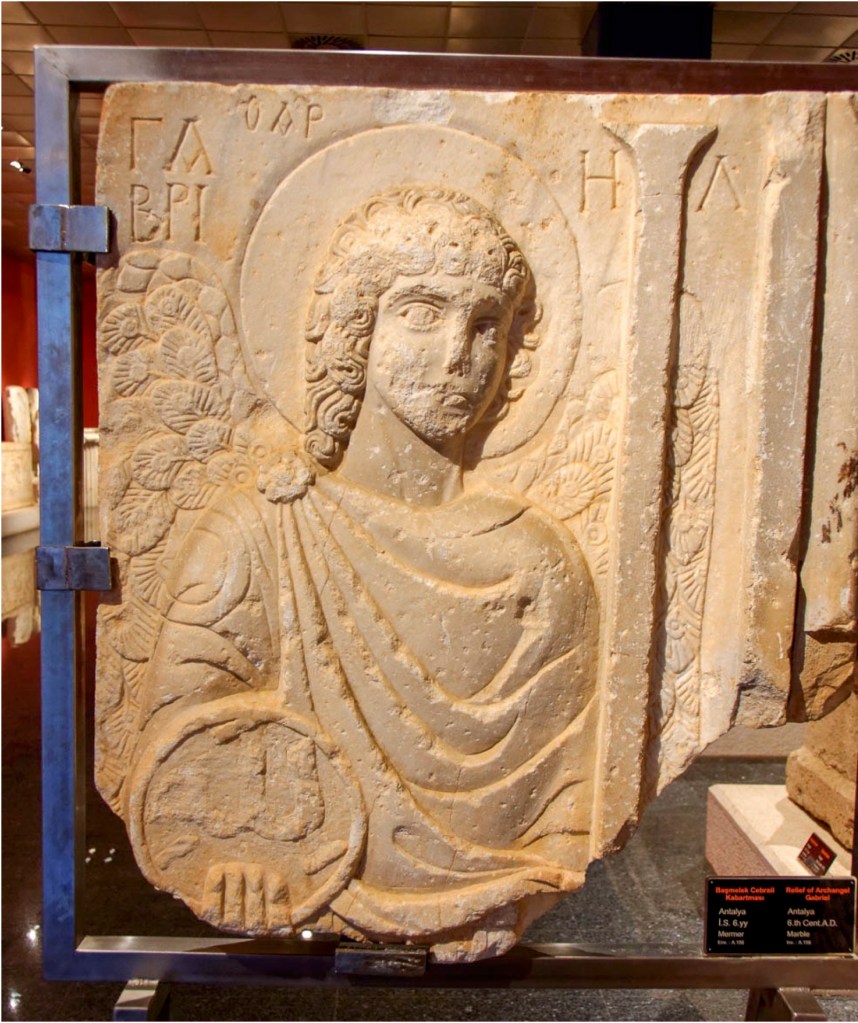
Relief of Angel Gabriel, Byzantine, 6th C. AD. @ Bible Places.
 Words of Grace
