
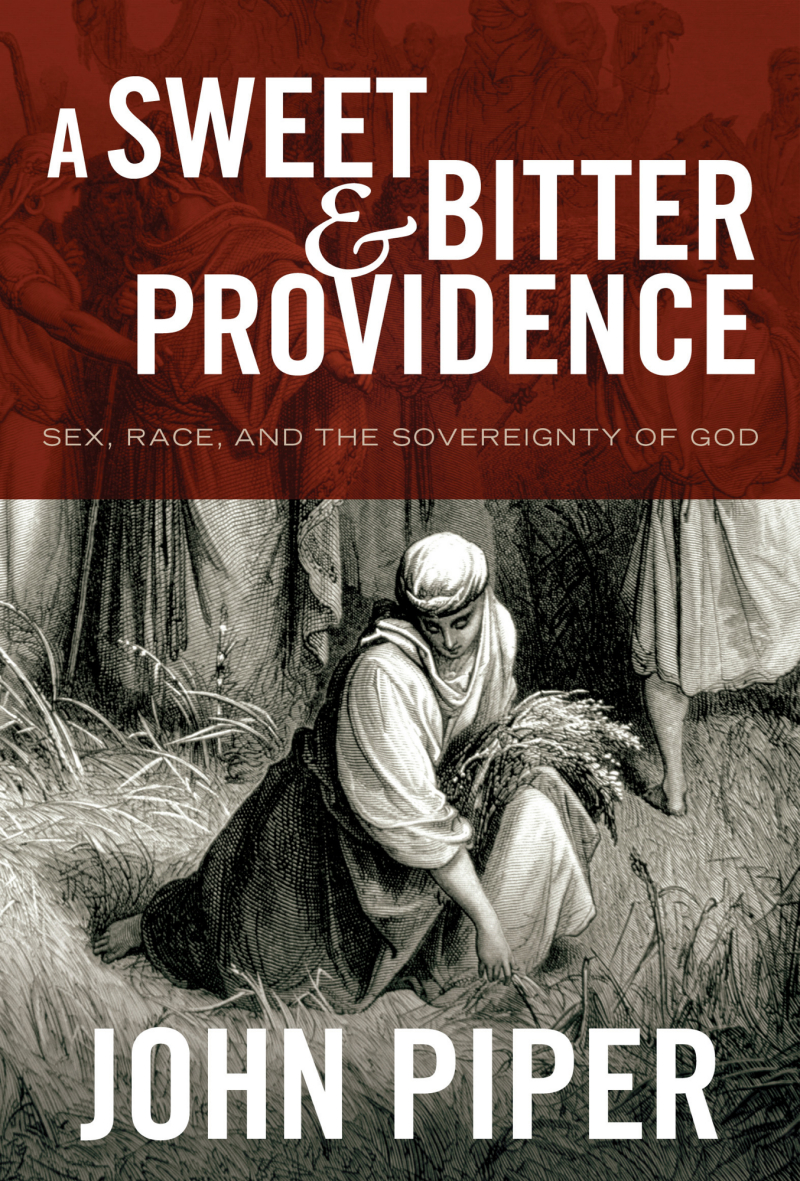
 Title: A Sweet and Bitter Providence: Sex, Race, and the Sovereignty of God
Author: John Piper
Publisher: Crossway Books, 2010; 160 pp. $17.99 (or you may download the entire book as a PDF or listen to the sermons this book was based on for free)
Recommendation (4-star scale): 
Who hasn’t experienced trouble and trial in this life?
Apart even from our own sin or even the sin of others against us, we have all experienced difficulties. Jobs have been lost or coveted jobs have not been received. Love has been given and left unreturned. Friendships have been broken. We may not have literally been hungry, but financial shortfalls because of high health care bills and unexpected car repairs and broken septic systems have not only left us wondering if we would be able to make the next house payment, but even being forced out of our homes. Death has come in seemingly untimely moments.
Heartache upon heartache, we all have known it.
Early in my pastoral ministry I came to the awareness that no matter the size of the smile, in every seat in every pew sat an individual with sorrow and a broken heart.
The recent work by John Piper, A Sweet and Bitter Providence: Sex, Race, and the Sovereignty of God, is the Biblical account of one who experienced sorrow and trouble. It is the story of Ruth — a poor, young, Gentile widow who moves to Israel with her destitute and even more troubled mother-in-law, Naomi. There was seemingly no good reason for her to go, but she did. And in that act of trust, God blessed Ruth, Naomi, the nation of Israel, and even the Gentile nations.
Piper points to seven reasons to read this Bible book:
- Ruth is the Word of God.
- Ruth is a love story.
- Ruth is a portrait of beautiful, noble manhood and womanhood.
- Ruth address racial and ethnic diversity and harmony.
- Ruth displays the sovereignty of God.
- Ruth displays radical acts of risk-taking love.
- Ruth displays the glory of Christ.
Acting on those principles, then, he expounds the story of Ruth in four chapters (following the account in Scripture), providing, among other things, helpful explanations of unusual components in the story. For example, who hasn’t wondered about Naomi’s advice to have Ruth go to Boaz’ threshing floor in the middle of the night and sleep at his feet under his cloak (Ruth 3:1ff)? That doesn’t sound like something I would tell either of my daughters to do! What is going on in that passage so that godly morality is not violated? And what about 4:14-15 — how is it that Naomi’s redeemer is not Boaz, but the child born to Ruth (as a careful reading of those verses clearly indicates)?
And most of all, what is God doing in the heartache and sorrow? Through His sovereign and trustworthy actions, He is working His good in our lives:
So when suffering comes, God’s children are meant to experience it as God’s fatherly discipline. It does not speak well of our faith if we doubt his love or if we become angry at God when he ordains our pain in our lives. The story of Ruth (along with Joseph and Job and Esther and others) is in the Bible to prepare us for bitter providences by showing us again and again that God is doing a thousand things that we do not know. And they are meant for our good.
So read this book. And find encouragement for a good and sovereign God intentionally weaving sorrow into your life to conform you to the image of His beloved Son and to demonstrate His magnificent grace to you.
 Words of Grace