
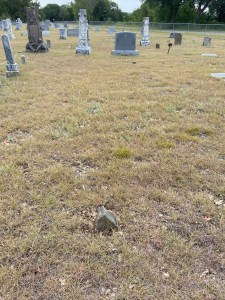
 Consider death.
Think about, contemplate, and ponder on the reality of death.
That’s Solomon’s counsel:
It is better to go to a house of mourning
Than to go to a house of feasting,
Because that is the end of every man,
And the living takes it to heart.…
The mind of the wise is in the house of mourning,
While the mind of fools is in the house of pleasure. (Eccl. 7:2, 4; NASB)
It is good to think about death because it sobers us about the reality of our own end. It prompts us to make appropriate plans and live in wise ways because of the soon appearing of the end. Contemplating death keeps us from folly and deluding ourselves with the desires for wanton pleasure.
Consider death.
Even more, consider the death of Christ.
Considering the end of our own lives may make us sober and wise, but considering the death of Christ can lead us to life and infinite joy.
On this Good Friday, we are wise to consider Christ’s death.
Consider the reality of Christ’s death. His was no false death. He was not comatose. He did not feign death. He died. And to prove His death, they wrapped His body in grave clothes, put His body in the tomb, and sealed that grave. Death was necessary for God’s wrath to be appeased. And death was necessary for Christ to demonstrate that death (and the sin from which death emanates) are not powerful over Him. We come to Good Friday worship with soberness, for it was our sin that necessitated His death if we would be redeemed. But we also come with a note of triumph because He really died to finally atone for our sin.
“For the death that He died, He died to sin once for all; but the life that He lives, He lives to God.” (Rom. 6:10; NASB)
Consider the perfection of Christ as He died. Everyone that dies, dies as a sinner. That is, all are born as sinners (Eph. 2:1-3) and all sin as sinners (Rom. 3:23; 5:12). No one is blameless when he dies. Except one. Christ was blameless. Christ did not die because He was under the penalty of death as a sinner by nature. And He did not die because He sinned. He was (and is) the perfect Man — born without sin and dying without sin. And as that sinless One, He could impute His perfection to those who trust in Him. His death was unjust in that He had done nothing worthy of death — no sin nature, no sinful word, no sinful deed, no sinful desire, and no sinful inclination. He was perfect. And He died so that He might impute that perfection to us who believe in Him and His work for us.
“He made Him who knew no sin to be sin on our behalf, so that we might become the righteousness of God in Him.” (2 Cor. 5:21; NASB)
Consider the wrath Christ endured as He died. Christ’s death was real and the wrath that He endured from God was real. God promised that He would be “pleased to crush Him” so that He would be rendered as the ultimate (final) guilt offering for man’s sin (Is. 53:10). And on the cross, God poured out all His retributive justice (holy wrath and anger) against Christ for the sins of those who would believe in Him. And that was the agony of Christ as He died — God enduring the wrath of God.
“About the ninth hour Jesus cried out with a loud voice, saying, “ELI, ELI, LAMA SABACHTHANI?” that is, “MY GOD, MY GOD, WHY HAVE YOU FORSAKEN ME?”” (Mt. 27:46; NASB)
Consider that Christ gave His life and did not have His life taken from Him. I have stood at bedsides as people breathed their last. I have stood alongside many caskets and at many gravesides. And no one ever voluntarily dies. All people die because of the means of another acting against them. That is true of illnesses, accidents, violent suffering, and even suicide. No one says, “I will die now” — and then dies without some means acting against his body. All people die because life is taken from them. Except Christ. In His death, Christ was sovereign. He willed His death, decreed His death, and gave His life only when He was ready to give His life. And in giving up His life by voluntarily dying, He asserted and demonstrated His victory over death.
“Therefore when Jesus had received the sour wine, He said, ‘It is finished!’ And He bowed His head and gave up His spirit.” (John 19:30; NASB)
Consider the outcome of Christ’s death — death is vanquished and sin is rendered powerless. The death of Christ was not the end of Christ. The death of Christ was the necessary precursor to the resurrection of Christ. Among other reasons, Christ had to die so that He could be resurrected and provide the final defeat of the great enemy of every man: sin and its consequence, death. He died to show He was alive; He died to give us life. He died to defeat the enemy. And He lives to assert that in no way was He defeated in death.
“But when this perishable will have put on the imperishable, and this mortal will have put on immortality, then will come about the saying that is written, ‘DEATH IS SWALLOWED UP in victory. O DEATH, WHERE IS YOUR VICTORY? O DEATH, WHERE IS YOUR STING?’ The sting of death is sin, and the power of sin is the law; but thanks be to God, who gives us the victory through our Lord Jesus Christ.” (1 Cor. 15:54-57 NASB)
Consider death and you will live wisely.
Consider (and believe) Christ’s death and you will live.
 Words of Grace